How this feature connects to others
Feature overview
What a landing page is
A landing page is a single page on the web that describes what your startup does, who it is for, and what a visitor should do next. At the early stage, it typically includes a headline that states your value proposition, an explanation of the problem and solution, a description of your key benefits, and a call to action — usually a sign-up form or an invitation to request early access.
A landing page is different from a full website. A full website might have documentation, a blog, case studies, and many other pages. A landing page focuses on one goal: getting the right type of visitor to take one specific action.
Why you build this during the BUILD stage, not earlier
It might seem logical to build a website as soon as you have an idea. Some founders do this, and occasionally it works. But a landing page makes claims — about the problem, the solution, and the value you deliver. Those claims are much stronger when they are grounded in evidence.
After your validation work, you know which problems your target customers described as most painful, which language resonated with them, and which benefits they found most compelling. That knowledge directly improves the quality of your landing page copy. The difference between a landing page written before validation and one written after is visible to anyone who reads it.
How zigzag builds your landing page
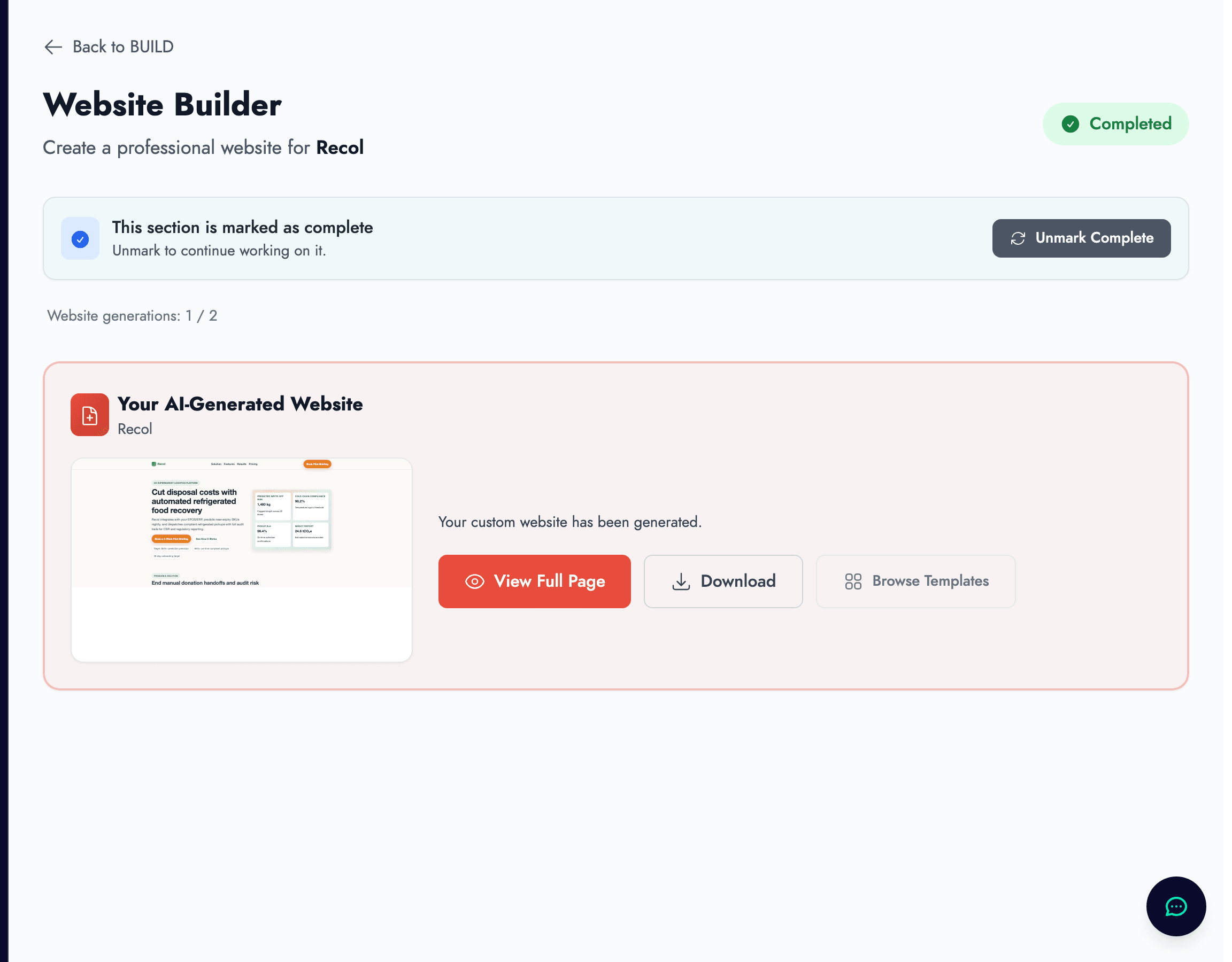
Zigzag generates a fully designed landing page based on your Lean Canvas, brand elements, and validation insights. The page includes a hero section, a problem and solution section, a features grid, and a call-to-action section. You can choose from a library of templates with different visual styles.
The generated page is mobile-responsive and ready to share or deploy. You can edit any section — the copy, the layout, the imagery — directly in the editor. Once you are satisfied with it, you can share the link or integrate it with your own domain.
Using your landing page as a validation tool
A landing page is not just a communication tool — it is also a test. How visitors behave on your page tells you things that surveys and interviews cannot. Do they scroll past the headline? Do they click the call to action? Do they sign up? Do they leave immediately?
If your landing page is live but very few people are signing up, that is information worth examining. It might mean the value proposition is not clear enough. It might mean you are attracting the wrong type of visitor. Or it might mean the problem you are describing does not resonate the way you expected. The data guides your next revision.
How the landing page connects to your investor materials
When you build your investor data room, your landing page becomes one of the materials investors can access. A live landing page demonstrates that you have moved from idea to execution — that you have a public presence, that you are building an audience, and that you have made real decisions about how to communicate your value.
In investor conversations and outreach emails, a live landing page is something concrete to point to. It tells the story of your startup in a way that is more immediate than a document. Investors can visit it, explore it, and share it — which a slide deck cannot offer.