How this feature connects to others
Builds on
Feature overview
What is a validation interview?
A validation interview is a structured conversation with someone who fits your target customer profile. The goal is not to sell them anything. The goal is to find out whether the problem you identified in your Lean Canvas actually exists in their life, how painful it is, and what they currently do about it.
Most first-time founders approach these conversations as informal sales calls. That is a mistake. When you are trying to sell, you guide the conversation toward "yes." When you are trying to learn, you guide the conversation toward the truth — even when that truth is uncomfortable.
Why do this before you build?
It is remarkably easy to build something that feels right internally and works technically, but that nobody actually wants. The problem is almost never the technology. It is that the founder had a clear picture of the problem in their head but had never tested whether that picture matched reality.
Validation interviews are the cheapest way to test your hypotheses before you invest in development. A twenty-minute conversation can save weeks of engineering work. Doing ten of them before you start building can completely reshape your understanding of the market — and often does.
Start scheduling validation interviews as soon as your critical hypotheses are defined. Do not wait until you have something to show. The best interviews happen before you have built anything, precisely because you are genuinely exploring rather than defending a decision already made.
How zigzag generates your interview guide
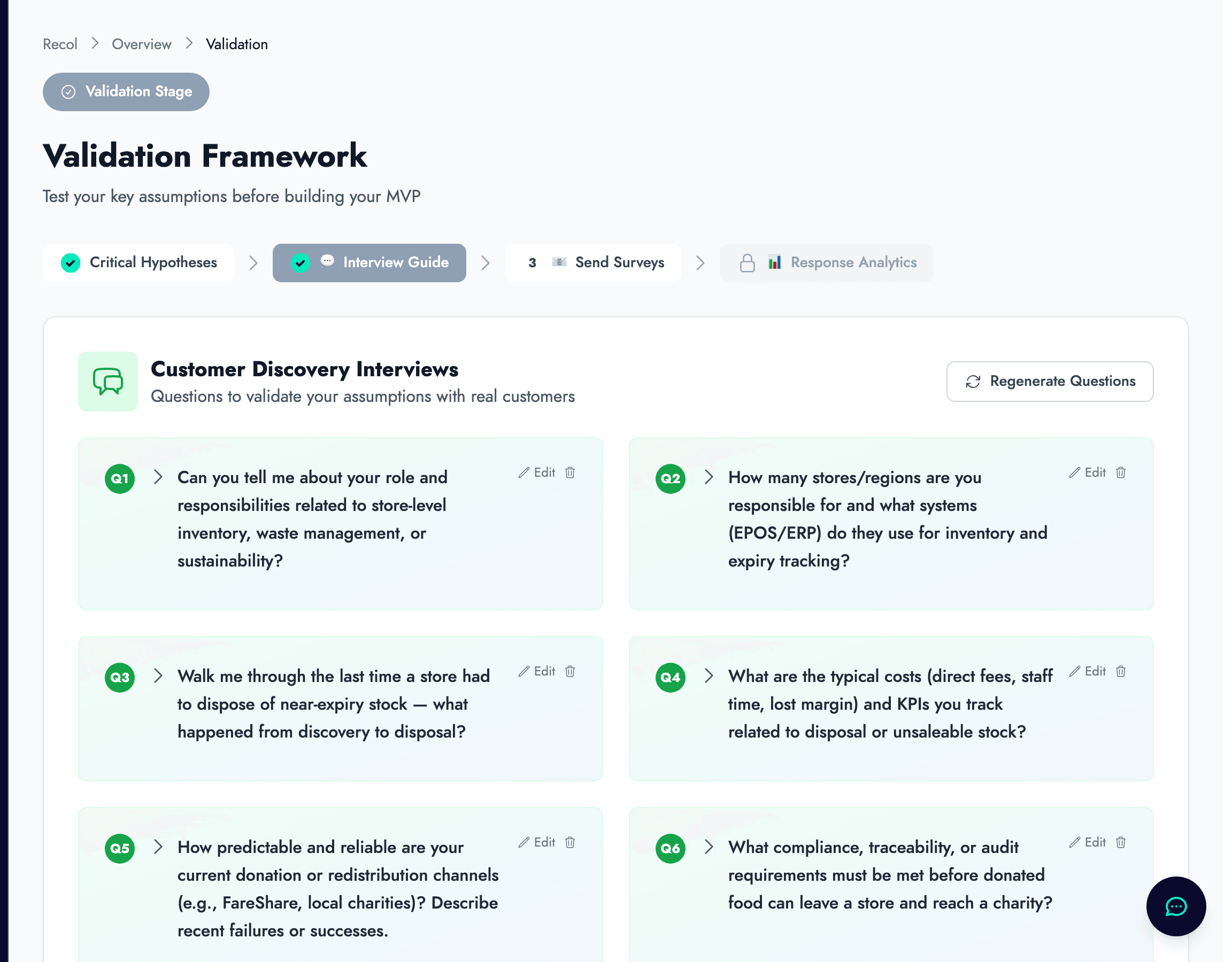
Zigzag generates your interview guide based on the content of your Lean Canvas and your critical hypotheses. The questions are designed to test your specific assumptions — about the problem, the customer, the existing alternatives, and the willingness to pay.
The default guide includes around fourteen questions across several categories: background questions to understand the customer's context, problem-exploration questions to find out whether the problem exists and how severe it is, and behavior questions to understand what the customer currently does.
You can edit any generated question, add your own, and remove ones that do not fit your situation. The guide is a starting point, not a script. Good interviews follow the energy of the conversation, not a rigid sequence.
How to run a good interview
Ask open questions. "Do you have trouble with X?" tends to get a polite yes. "Tell me about the last time you tried to do X" gets you a story. Stories are far more informative than opinions. They are grounded in memory rather than imagination.
Do not mention your solution during the interview. If you describe your product early, every response that follows will be filtered through the respondent's desire to be helpful to you. You want unfiltered observations about their life, not feedback on your idea.
Take notes on what they actually say — not on what you wanted to hear. Write down quotes directly. The most useful thing you can do immediately after an interview is write down two or three things that genuinely surprised you.
What comes next after you have your guide
After you have built your interview guide, the next step is to actually send it to real people. Zigzag helps you invite potential customers by email and track who has responded. Once you have collected responses, the platform generates an analysis that highlights patterns across all submissions.
The findings from these interviews feed directly into your customer discovery documentation and will shape your brand identity work. A validated understanding of your customers is the best raw material for building a brand that resonates with them. Everything from your messaging to your product priorities improves when it is grounded in what real people told you.